
Precision Load Cell Sizing for Pressure Relief Valve Testing
Precision Load Cell Sizing for Pressure Relief Valve Testing
Accurate Valve Testing Starts With Proper Load Cell Selection
Load cell sizing is one of the most misunderstood steps in set pressure verification, and it has a direct impact on accuracy and consistency across your crew.
The right size isn’t about valve size. It’s determined by the force required to lift the valve, based on set pressure and effective seat area.
Get it wrong, and technicians can see inconsistent results in the field.
Continue reading to see how to calculate the proper load cell size for your next test.
Proper Load Cell Sizing for Accurate Valve Testing
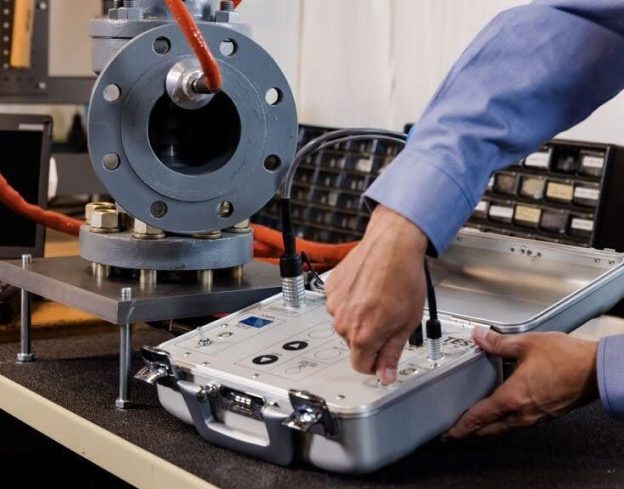
A load cell for pressure relief valve testing should be selected based on the expected lift force, calculated using set pressure and effective seat area.
For best accuracy, the required lift force should typically fall between 50% and 90% of the load cell’s maximum capacity.
Operating within this range helps improve:
- Lift detection sensitivity
- Measurement resolution
- Repeatability across technicians
- Overall testing consistency
Why Proper Load Cell Sizing Matters
Load cell selection directly impacts:
- Set pressure verification accuracy
- Lift detection sensitivity
- Repeatability across technicians
- Confidence in field results
Undersized load cells may introduce overload risk and unstable readings
Oversized load cells can reduce signal resolution and make precise lift detection more difficult.
The objective is simple:
Keep your expected test force within the optimal operating range of the load cell.
How to Calculate Lift Force
Step 1
Understand What You’re Measuring
In in-line (in-situ) testing, additional force is applied to lift the valve during testing.
Lift force is calculated using:
F=P×AF = P \times AF=P×A
Where:
- F = Lift force
- P = Set pressure
- A = Effective seat area
This is the force your load cell must measure accurately during testing.
Step 2
Estimate Required Force
Example Calulation:
If a valve has:
- Set pressure = 150 psi
- Effective seat area = 2.5 in²
The required lift force would be:
150×2.5=375 lbf150 \times 2.5 = 375\ \mathrm{lbf}150×2.5=375 lbf
To stay within the recommended operating range:
- 375 lbf should fall between 50%–90% of load cell capacity
- Recommended load cell range ≈ 500–750 lbf
- Practical choice: 500 lbf
Step 3:
Understand What You’re
Measuring
For best performance, the expected lift force should generally fall between 50% and 90% of the load cell’s maximum capacity.
Operating within this range helps provide:
- Better signal resolution
- More accurate lift detection
- Greater repeatability
- Reduced overload risk
Why this Range Matters:
- Below 50% capacity:
Signal sensitivity can decrease, making precise lift detection more difficult - Above 90% capacity:
Measurement quality may decline while increasing the risk of overload.
As a best practice, select a load cell where your typical tests fall near the middle of the operating range rather than near the extremes.
Quick Reference: Load Cell Selection Guide
| Typical Lift Force | Recommended Load Cell Capacity |
|---|---|
| 100–300 lbf | 200–500 lbf |
| 300–750 lbf | 500–1,000 lbf |
| 750–1,500 lbf | 1,000–2,000 lbf |
| 1,500–3,500 lbf | 2,000–5,000 lbf |
| 3,500–7,000 lbf | 5,000–10,000 lbf |
| 7,000+ lbf | 10,000+ lbf |
Step 4
Plan for Your Valve Mix
Most field teams test a wide range of valves, not just one.
Best practice:
- Use multiple load cells for different testing ranges
- Match capacity to expected lift force
- Avoid forcing one load cell to cover every application
These practices help improve:
- Accuracy across different jobs
- Technician consistency
- Repeatable field performance
Step 5
Don’t Ignore How Force Is Applied
Even properly sized load cells cannot fully compensate for inconsistent force application during valve testing.
Many traditional testing setups still rely on heavy manual hand jacks that can require additional setup time, multiple technicians, and manual pumping throughout the test. The incremental nature of manual force application can make it more difficult to achieve consistent testing conditions from one technician to the next.
In outage environments and field service operations, these limitations can slow testing workflows and make it more difficult to maintain consistent testing performance across crews.
Manual pumping can also introduce:
- Uneven loading
- Sudden pressure changes near the simmer point
- Greater operator-to-operator variability
- Less repeatable lift detection
These factors can affect testing accuracy and repeatability in the field.
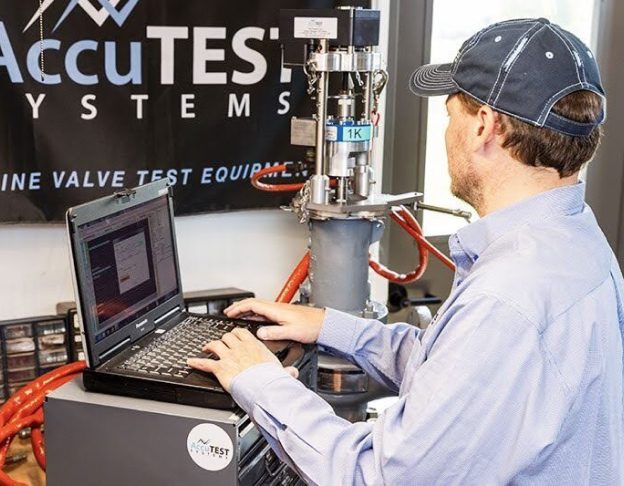
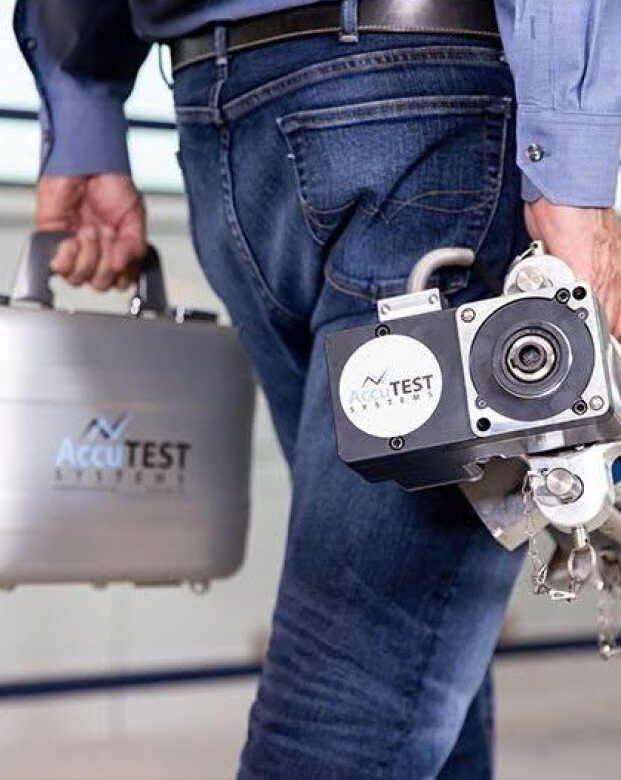
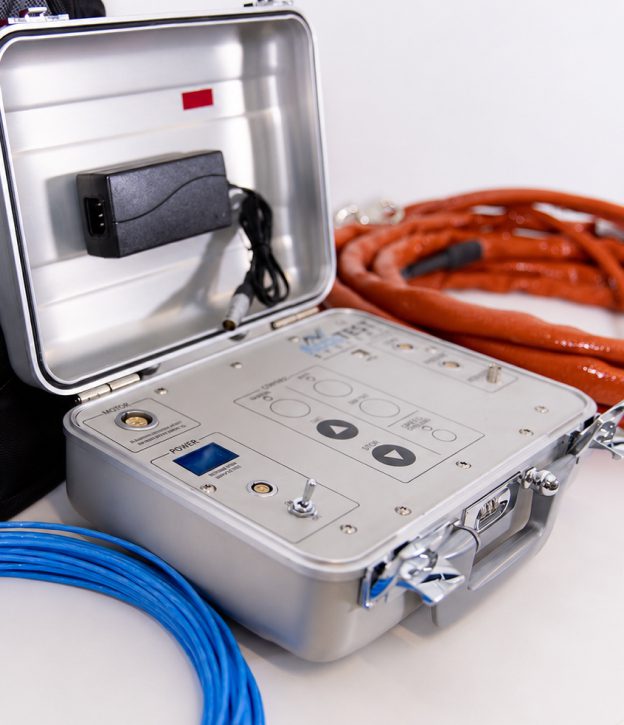
AccuTEST systems use a motor-driven, computer-controlled actuator to provide smooth, consistent force application throughout the test. This improves repeatability while keeping the technician fully in control of the testing process. Operators can choose automated operation or switch to Manual Mode, where they control the actuator directly while still benefiting from the same smooth, motorized force application that helps eliminate the pressure spikes commonly associated with manual pumping.
This allows technicians to:
- Reduce setup complexity
- Improve testing consistency
- Complete testing more efficiently
- Reduce dependence on multi-technician setups
- Maintain more repeatable field performance while retaining full operator control
In addition, AccuTEST’s self-aligning rig architecture is designed to help minimize side-loading during testing, supporting more stable and accurate force measurement throughout the lift cycle.
Field Insights:
Why Seat Area Matters More Than Valve Size
One of the most common mistakes in field testing is using valve size alone to estimate load cell requirements.
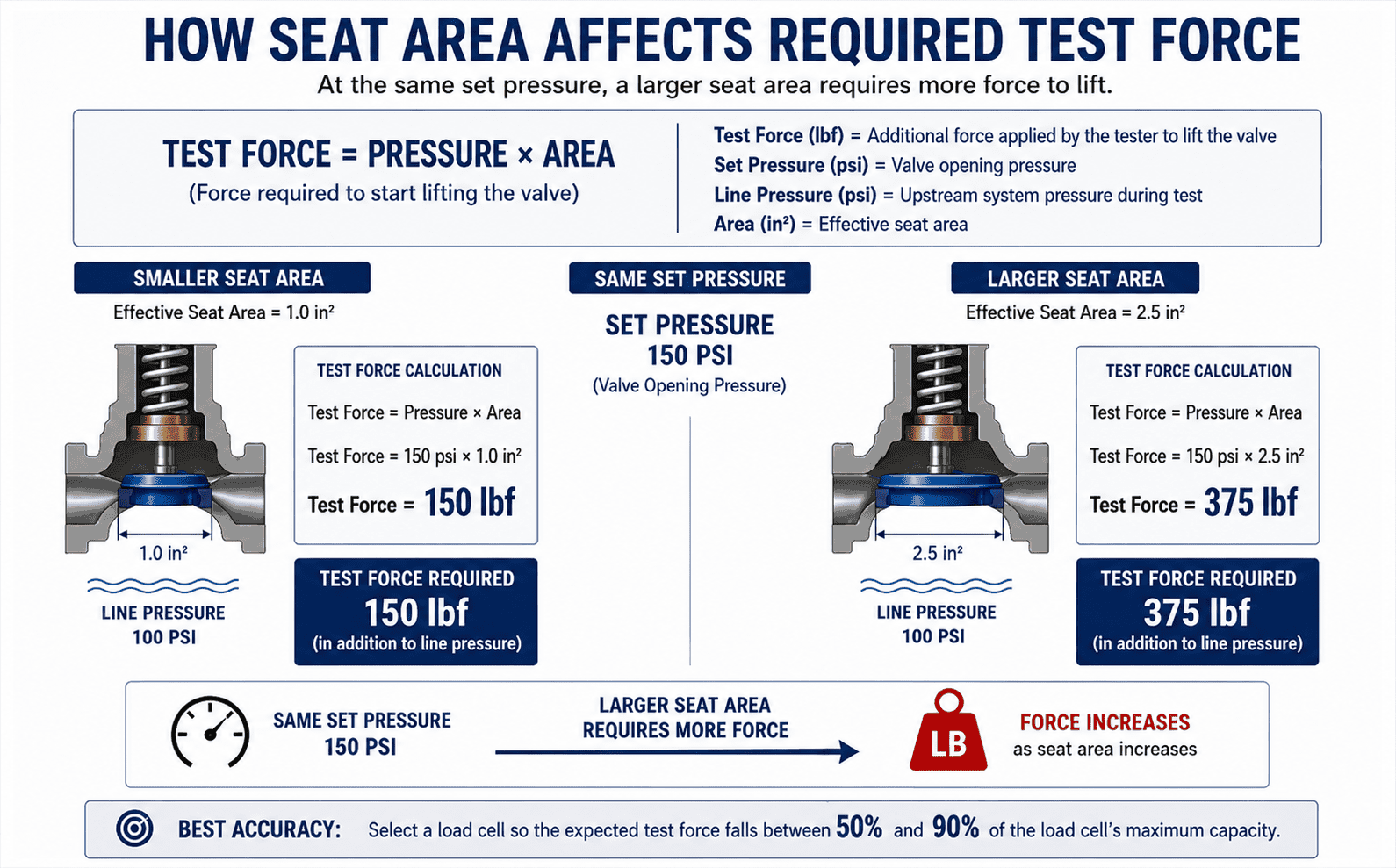
However, two valves operating at the same set pressure can require dramatically different lift forces depending on their effective seat area.
At the same set pressure:
- Smaller seat area = lower required lift force
- Larger seat area = significantly higher required lift force
This is why valve size alone is not a reliable sizing method.
A larger valve will often require a much higher load cell capacity — even at the same pressure — because the effective seat area directly affects the force required to lift the valve.
Proper force estimation based on seat area is essential for accurate load cell selection and repeatable testing performance.
Traditional Testing Systems
vs. AccuTEST
| Traditional Testing Systems | AccuTEST Systems |
|---|---|
| Manual force application | Motor-driven controlled loading |
| Operator-dependent lift detection | Automated lift detection |
| Greater technician variability | More repeatable testing |
| Manual reporting workflows | Digital traceable reports |
| Multiple setup adjustments | Simplified setup workflows |
| Inconsistent field results | Standardized testing performance |
| Multiple technicians often required | Designed for efficient one-tech operation |
Common Load Cell
Sizing Mistakes
Using Valve Size Instead of Force
Seat area determines lift force — not valve diameter alone.
Oversizing the Load Cell
Oversized load cells can reduce measurement resolution and make lift detection more difficult.
Operating Near Maximum Capacity
Running near capacity increases overload risk and may reduce measurement quality.
Ignoring Setup Quality
Alignment, mounting stability, and force application all play a critical role in testing performance.
Improve Pressure Relief Valve Testing Performance
Load cell sizing is only one part of achieving accurate pressure relief valve testing.
AccuTEST systems combine:
- Controlled force application
- Automated lift detection
- Digital reporting
- Repeatable testing workflows
- Efficient one-tech operation
The Result:
- More consistent testing
- Faster field workflows
- Reduced technician dependency
- Improved outage efficiency
- Greater confidence in results