
Your Valve Passes—But Does Your Data? What Every Valve Technician Needs to Know About Test Accuracy

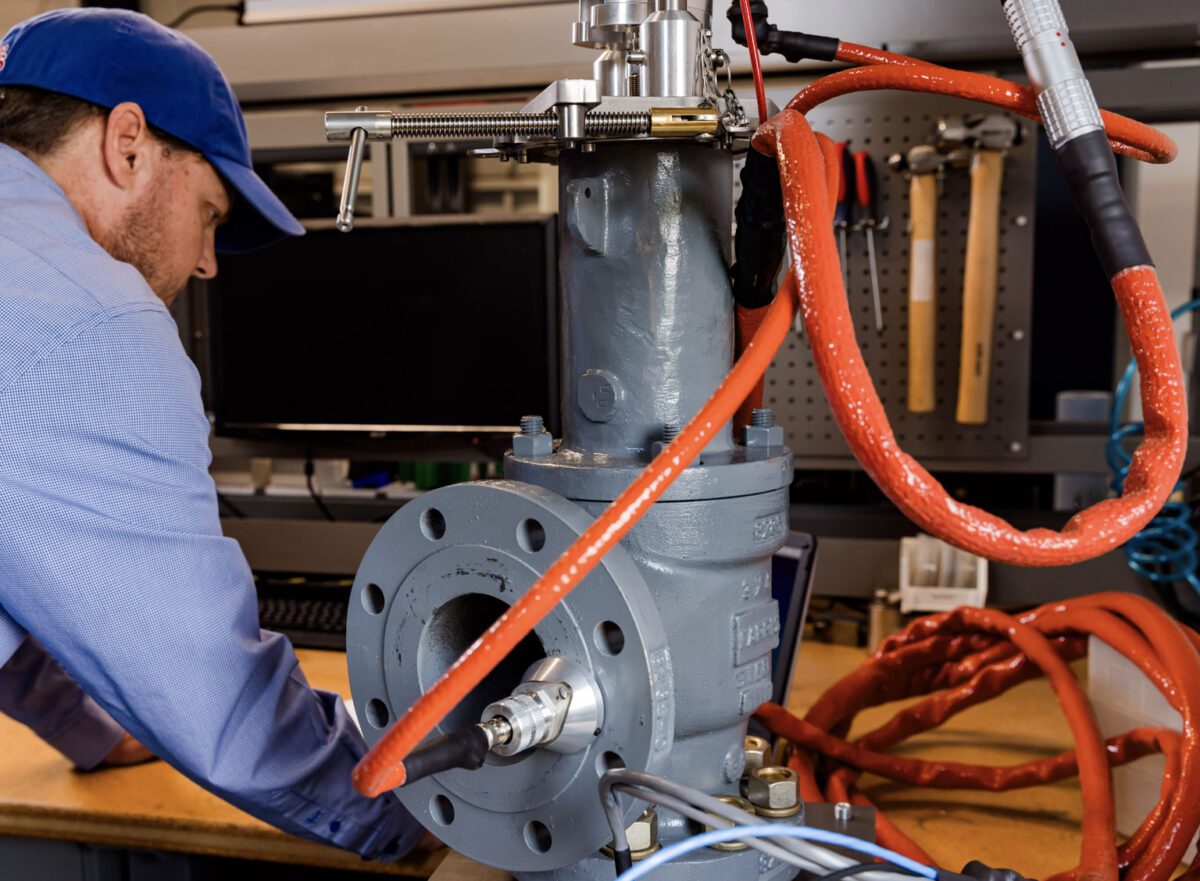
For today’s valve technician, a valve passing a test is no longer the finish line.
Customers, auditors, and regulators now expect more than a pass result. They expect test results that are accurate, repeatable, and defensible.
As more new valve technicians enter the workforce (and experienced technicians retire), test accuracy and data consistency have become some of the biggest challenges facing valve repair shops and in-house maintenance teams.
The risk extends beyond failed audits. It’s lost customer trust, rework, and liability tied to data that can’t stand up to scrutiny.
For shop owners, this creates a critical reality: A valve that passes without reliable data still puts your business at risk.
This article explains why accurate, repeatable test data matters more than ever, where traditional testing breaks down, and how modern electronic inline systems help every valve technician—regardless of experience—deliver consistent, defensible results.
What Is Valve Test Accuracy?
Valve test accuracy refers to how precisely and repeatably a pressure relief valve’s set pressure, lift, and reseat values are measured and documented during testing.
For a valve technician, accuracy means producing pressure relief valve test data that is repeatable across technicians, traceable for audits, and defensible for customers and regulators.
Why Valve Test Accuracy Matters More Than Ever
Why is valve test accuracy important for valve technicians?
- Ensures pressure relief valves operate within certified limits
- Reduces variability between valve technicians
- Produces pressure relief valve test data that can be reviewed and audited
Pressure relief valves are safety-critical assets. When a valve fails in service, investigators don’t just ask who tested it. They ask:
- How was it tested?
- Was the method repeatable?
- Can the results be verified?
In many shops, test results still depend on manual adjustments, technician timing, and loosely documented data. That approach worked when expectations were lower. It doesn’t hold up today.
Valve test accuracy now impacts:
- Customer confidence and retention
- Compliance with ASME, NBIC, and internal QA requirements
- Exposure to liability and rework
- The reputation of your shop, not just the technician
For shop owners, accuracy isn’t about perfection—it’s about reducing risk and protecting the business as staffing and customer demands change.
The Hidden Risk of Operator-Dependent Testing Methods:
Inconsistent valve test results are most often caused by operator-dependent testing methods that rely on manual pressure control, technician reaction time, and subjective interpretation.
Even well-trained valve technicians can introduce variability through:
- Manual pressure ramp rates
- Inconsistent stabilization time
- Subjective interpretation of set pressure
- Delayed reaction during lift and reseat
When experienced technicians retire, these gaps become even more visible. New technicians may follow procedures correctly and still generate inconsistent data.
The problem isn’t the technician. It’s the testing method.
If accuracy depends on years of experience, your operation becomes harder to scale, harder to train, and harder to defend.
Why “Pass” Is No Longer Enough:
From the customer’s perspective, a simple “pass” result raises questions:
- How close was the valve to its limit?
- Would another technician get the same result?
- Can the data be audited later?
From a business perspective, undocumented or inconsistent results create long-term risk.
Reliable pressure relief valve test data must meet three criteria:
- Repeatable – Different technicians get the same result
- Traceable – Data can be reviewed and verified later
- Defensible – Results stand up to customer review, audits, and regulatory scrutiny
Without these elements, accuracy becomes an assumption—not a fact.
What Does Accurate Pressure Relief Valve Test Data Include?
- Repeatable set and reseat pressure values
- Controlled and documented pressure ramp rates
- Time-stamped test results
- Traceable digital records
- Consistent results across different valve technicians
How Modern Inline Systems Improve Valve Test Accuracy
This is where modern electronic inline testing systems change the equation.
Instead of relying on technician timing and manual control, systems like AccuTEST are designed to measure and control the test process directly
What Changes for the Valve Technician:
For technicians—especially those early in their careers—inline electronic testing provides:
- Controlled pressure ramp rates
- Automated detection of set and reseat points
- High-resolution pressure and time data
- Clear, repeatable test results
The system controls the test sequence.
The technician focuses on safe, consistent execution—not interpretation.
This dramatically shortens the learning curve while protecting test accuracy.
How do modern testing systems improve valve test accuracy?
Modern electronic inline testing systems improve valve test accuracy by controlling pressure ramp rates, automatically detecting set and reseat points, and generating repeatable pressure relief valve test data independent of technician experience.
Why Shop Owners Benefit Even More Than Technicians:
For test & repair shop owners, the real value isn’t just accuracy—it’s consistency across the entire operation.
With electronic inline systems:
- Test results no longer depend on “who ran the test”
- Training time is reduced without sacrificing quality
- Data is standardized across technicians and shifts
- Reports are consistent, professional, and audit-ready
The result: Your shop produces reliable valve test data every time—regardless of technician experience.
That consistency protects your reputation, simplifies audits, and gives you greater operational control as your business scales.
Pressure Relief Valve Test Data That Holds Up
Accurate pressure relief valve test data isn’t just about measurement—it’s about confidence.
Inline electronic systems capture:
- Actual pressure behavior throughout the test
- Precise lift and reseat events
- Time-stamped, traceable data records
Instead of relying on post-test justification, the data provides clear, objective evidence of test performance.
For customers, that means transparency.
For shop owners, it means reduced exposure and fewer disputes.
The Training Advantage: Accuracy Without Guesswork
Valve technician training is one of the biggest operational challenges facing service shops today. Experienced technicians are harder to replace, and training new hires takes time.
Electronic inline testing systems help bridge that gap by:
- Standardizing test execution
- Reducing reliance on subjective judgment
- Reinforcing correct procedures through the system itself
New technicians gain confidence faster—without compromising test accuracy.
That’s a win for productivity and quality.
The Bottom Line: Accuracy Protects Your Business
A valve passing a test is no longer the benchmark.
Accurate, repeatable, defensible data is.
For today’s valve technicians (and the shop owners who depend on them), modern testing systems aren’t about replacing expertise. They’re about protecting accuracy, consistency, and confidence.
The result:
- Consistent valve test accuracy
- Reliable pressure relief valve test data
- Reduced training risk
- Greater customer confidence
Valve Test Accuracy FAQs:
Q: What is the most common cause of poor valve test accuracy?
A: Poor valve test accuracy is most commonly caused by operator-dependent testing methods that rely on manual pressure control and subjective judgment.
Q: Can two valve technicians get different results testing the same valve?
A: Yes. Without controlled testing systems, variations in pressure ramp rate, timing, and interpretation can produce different results between technicians.
Q: How can pressure relief valve test data be verified later?
A: Pressure relief valve test data can be verified through time-stamped, traceable digital records that document the full test process.
Ready to Take the Guesswork Out of Valve Testing?
AccuTEST electronic inline systems are designed to help every valve technician produce accurate, repeatable results—while giving shop owners confidence in the data behind every test.
Ensure accuracy. Protect your reputation. Standardize results.
Learn how AccuTEST helps valve repair shops deliver defensible test data on every valve.


