
What Is a Pressure Relief Valve? Definition, Function, and Industrial Applications

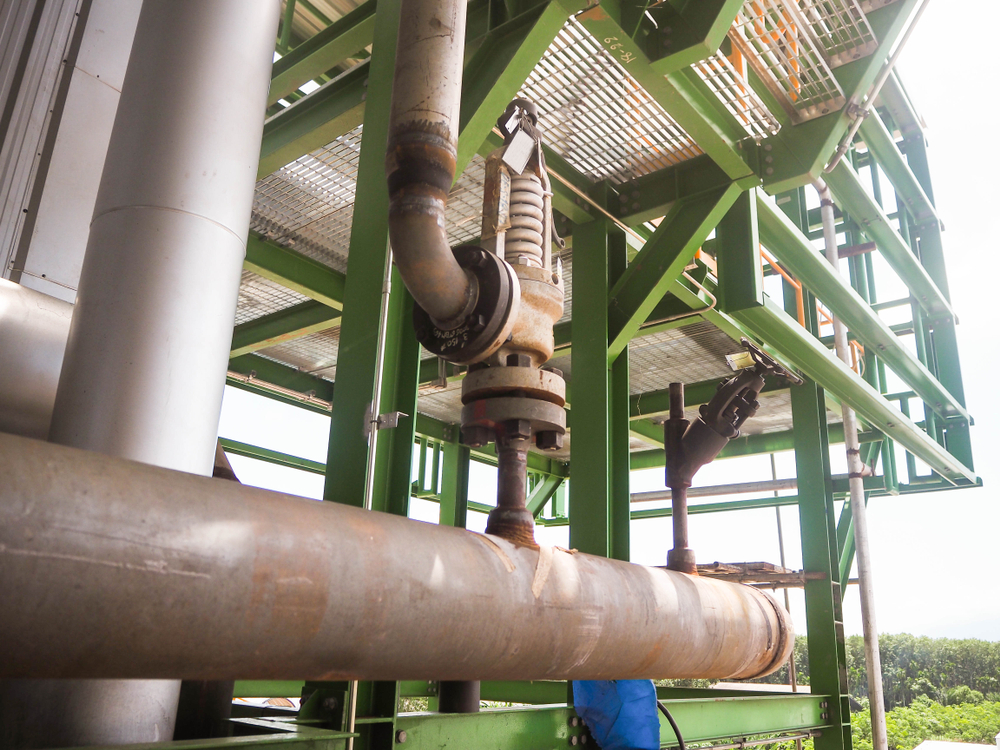
Steam systems, boilers, gas lines, hydraulic systems, and process vessels are all designed to operate within defined pressure limits. When those limits are exceeded, the consequences can range from equipment damage to catastrophic failure.
That’s where pressure relief valves come in.
Whether you operate a test & repair shop or manage field service crews, understanding how pressure relief valves function — and how they protect your customer’s system — is fundamental to safe, reliable operation.
This article breaks it down clearly:
- What a pressure relief valve is
- How it works
- When it activates
- The difference between safety valves, relief valves, and safety relief valves
- Why proper testing matters more than most people realize
What Is a Pressure Relief Valve?
A pressure relief valve (PRV) — commonly referred to internationally as a pressure safety valve (PSV) or safety relief valve (SRV) — is a mechanical safety device designed to protect pressurized systems from exceeding their maximum allowable working pressure (MAWP).
It opens automatically at a predetermined set pressure to relieve excess pressure and closes once safe operating conditions are restored.
Its job is simple but critical:
- Open at a predetermined set pressure
- Discharge excess pressure
- Close (reseat) once pressure returns to a safe range
Without it, a pressurized system has no automatic protection against overpressure conditions.
A pressure relief valve protects:
- Equipment
- Personnel
- Facility infrastructure
- Environmental compliance
- Operational continuity
It is not a performance component.
It is a last line of defense.
Why Pressure Relief Valves Exist in Industrial Systems
Industrial systems operate under pressure every day:
Steam. Gas. Liquids. Hydraulic fluid. Process media.
Across refineries, power plants, chemical facilities, pulp & paper mills, and boiler systems, pressure is essential — but it must be controlled.
When pressure rises beyond design limits, the consequences can include:
- Equipment damage
- Process disruption
- Environmental release
- Personnel injury
- Regulatory violations
- Unplanned shutdowns
For test & repair providers, this risk is not theoretical. Your customers rely on these valves to function correctly when it matters most.
A pressure relief valve exists for one reason:
To prevent overpressure from turning into failure.
It acts automatically — without operator intervention.
It opens when required. It closes when it should.
In many systems, it is the final safeguard between normal operation and catastrophic damage.
What Does a Pressure Relief Valve Do?
At its core, a pressure relief valve automatically controls excess pressure.
Step-by-step operation:
- Monitors system pressure continuously
The valve remains closed below its set pressure. - Opens at a predetermined set pressure
When system pressure exceeds the setpoint, internal force overcomes spring tension and the valve begins to lift. - Relieves excess pressure
The valve discharges steam, gas, or liquid to reduce system pressure. - Reseats once pressure returns to a safe range
The spring forces the valve closed after pressure drops below the reseating threshold (blowdown).
There is no switch.
No manual trigger.
No operator decision required.
That automatic response is what defines it as a safety device, not a control valve.
When Does a Pressure Relief Valve Activate?
A pressure relief valve activates when system pressure exceeds its setpoint.
Common scenarios include:
- Blocked discharge conditions
- Thermal expansion in a closed system
- Pump or compressor malfunction
- Control valve failure
- Fire exposure (fire case sizing under API / ISO / PED design scenarios)
The valve is designed to prevent pressure from exceeding MAWP.
If it fails to open at the correct pressure — or fails to reseat properly — the system is no longer protected as designed.
How Does a Pressure Relief Valve Work?
A pressure relief valve operates on a mechanical balance between system pressure and spring force.
Key Components:
Most spring-loaded valves (PRV/PSV/SRV) include:
- Spring – Determines set pressure
- Disc & Seat – Sealing surfaces
- Nozzle – Directs system pressure to the disc
- Bonnet – Houses the spring assembly
- Adjustment Mechanism – Used to calibrate set pressure
Operating Principles:
- System pressure pushes upward on the disc
- Spring force pushes downward
- When pressure exceeds spring force, the valve opens
- As pressure drops, the spring reseats the disc
In simple terms:
Pressure pushes up.
The spring pushes down.
When pressure wins, the valve opens.
Accurate set pressure is critical.
If spring tension drifts or is misadjusted, the valve may open too early, too late, or not at all.
Safety Valve vs. Relief Valve vs. Safety Relief Valve
Terminology varies globally, which is where confusion often arises.
In North America (ASME terminology) and Europe/international markets (PED / ISO terminology), the distinctions are similar but naming conventions differ.
| Feature | Safety Valve | Relief Valve |
| Typical Use | Steam, air, or other compressible gases | Liquids |
| Opening Action | Rapid “pop” action | Gradual, proportional opening |
| Discharge Behavior | Achieves full lift quickly | Opens in proportion to rising pressure |
| Common Industries | Power generation, boilers | Oil & gas, chemical processing, hydraulic systems |
Key Takeaways:
- Safety valve → Fast-opening (“pop”) for compressible media
- Relief valve → Modulating for liquids
- Safety relief valve (SRV / PSV) → General term widely used outside the U.S.
In many international specifications, PSV is the preferred term, even when referring to devices that would be called safety or relief valves in ASME contexts.
Why Pressure Relief Valve Performance Is Mission-Critical
Installing a valve is not enough.
Performance must be verified.
These valves may sit inactive for years — but when required, they must function perfectly.
Industries Where They Are Used:
- Refineries
- Power generation facilities
- Chemical processing plants
- Petrochemical operations
- Pulp & paper mills
- Industrial boilers
- Gas compression systems
- Hydraulic systems
In every case, they protect high-energy systems.
Common Failure Modes:
A valve can appear normal and still fail:
- Setpoint drift
- Seat leakage
- Improper lift
- Reseating issues (blowdown problems)
- Spring fatigue
- Improper calibration
These issues are not visible externally.
The Critical Role of Testing and Verification
Pressure relief valves are not install-and-forget devices.
Proper testing includes:
- Set pressure verification
- Lift verification
- Seat tightness / leakage testing
- Blowdown / reseat confirmation
- Accurate documentation
Testing ensures the valve performs exactly at its design conditions — not approximately.
For many industries, testing intervals are governed by:
- ASME Boiler & Pressure Vessel Code (North America)
- Pressure Equipment Directive (PED) (Europe)
- Plant-specific risk and reliability programs
Why Accurate Field Testing Is Essential
Traditional testing methods often introduce:
- Operator variability
- Manual calculation errors
- Inconsistent documentation
- Two-person lift requirements
- Heavy or outdated equipment
Modern testing systems improve:
- Accuracy
- Repeatability
- Data capture
- Documentation quality
- Audit defensibility
For test & repair providers, this is not just about compliance — it’s about reducing liability and protecting customers.
Frequently Asked Questions
What is a pressure relief valve used for?
A pressure relief valve prevents overpressure by opening automatically at a defined setpoint and relieving excess pressure.
How often should pressure relief valves be tested?
Testing frequency depends on:
- Applicable codes (ASME, PED, etc.)
- Service conditions
- Risk classification
Annual or multi-year intervals are common, but verification is always required.
Is a safety valve the same as a relief valve?
No, a safety valve is not the same as relief valve:
- Safety valves → compressible media, rapid opening
- Relief valves → liquids, proportional opening
What is a PSV?
A PSV (Pressure Safety Valve) is a commonly used international term for a pressure relief device and often refers broadly to safety relief valves.
Can a pressure relief valve fail without visible signs?
Yes, a pressure relief valve can fail without visible signs. Internal failures such as setpoint drift or spring fatigue are not externally visible.
Testing is the only reliable verification method.
A Pressure Relief Valve Is Only as Reliable as Its Last Verified Test
Installing a pressure relief valve is essential — but installation alone does not guarantee protection.
A valve protects a system only if it:
- Opens at the correct set pressure
- Achieves proper lift
- Reseats correctly
- Is supported by accurate, defensible documentation
When an overpressure event occurs, there is no second chance.
For service companies and repair providers, consistent and repeatable testing protects:
- Your customers
- Your reputation
- Your liability exposure
Reliability isn’t assumed. It’s verified.
If you’re looking to improve the accuracy, consistency, and documentation of your field testing, learn how the AccuTEST System supports modern pressure relief valve verification.


