
Safety Valve Testing: Sensor Accuracy vs. Test Repeatability

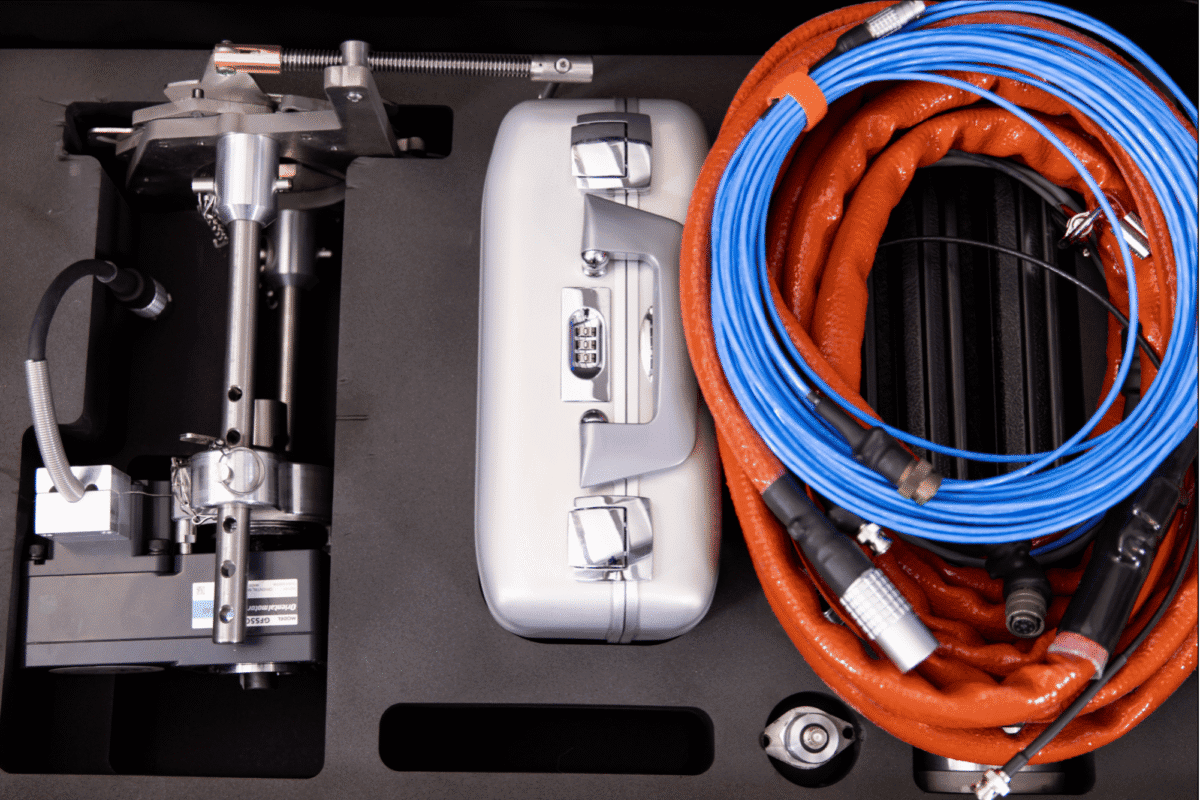
When evaluating in-line safety valve testing equipment, accuracy specifications are often one of the first things engineers compare. But a highly accurate sensor does not necessarily mean the complete valve test will produce highly repeatable results.
Sensor accuracy describes how accurately a sensor measures a value. Test repeatability describes how consistently the complete testing process produces the same result under the same conditions.
Both matter. And understanding the difference is important when comparing safety valve testing systems.
What Does Sensor Accuracy Mean in Safety Valve Testing?
In a lift-assist safety valve test, sensors measure variables such as applied lift force and process pressure. The accuracy specification tells you how closely the sensor can measure the actual value.
For example, AccuTEST load cells have an accuracy of:
±0.075% of full scale (FS).
“Full scale” is important. An accuracy specification expressed as a percentage of full scale is based on the sensor’s total measurement range, not necessarily the value being measured during a particular test.
That is why two accuracy percentages should not automatically be compared without understanding:
- What component the specification applies to
- Whether accuracy is stated as a percentage of full scale or measured value
- The measurement range of the sensor
- Calibration requirements
- The conditions under which the specification applies
Sensor accuracy is important, but it is only one part of the complete test.
What Is Test Repeatability in Safety Valve Testing?
Repeatability answers a different question:
If the same valve is tested repeatedly under the same conditions, how consistent are the results?
For a safety valve testing program, repeatability matters because a result should not depend unnecessarily on which qualified technician performs the test or subtle differences in how lifting force is applied.
A repeatable testing process helps plants and valve service companies build confidence that differences between test results represent actual valve behavior—not unnecessary variation introduced by the testing process.
Why Doesn’t Sensor Accuracy Tell the Whole Story?
Imagine two testing systems using equally accurate load cells.
If one system applies lift force smoothly and consistently while another depends more heavily on the technician to generate or control the lifting force, the two systems may not produce the same level of test-to-test consistency.
Likewise, a highly accurate load cell cannot correct for poor test-rig alignment or mechanical side loading.
The sensor measures what happens during the test.
The complete testing system determines how that test is performed.
That is why safety valve testing equipment should be evaluated as a complete system rather than by a single sensor specification.
5 Factors That Can Affect Safety Valve Test Repeatability
Repeatability depends on more than the accuracy of the sensors themselves. These five factors can influence how consistently a safety valve testing system produces results from one test to the next.
1. Sensor Accuracy and Calibration
Accurate load and pressure measurements are fundamental to calculating set pressure.
Sensors should be appropriately sized for the application, properly calibrated, and maintained throughout the equipment’s life.
But sensor accuracy establishes the quality of the measurement. It does not control all of the mechanical and operational factors occurring during the test.
2. Lift-Force Control
How force is applied becomes particularly important as the valve approaches its opening point.
Rapid, inconsistent, or technician-dependent force application can make valve behavior more difficult to identify consistently.
AccuTEST uses a computer-controlled electric drive to apply smooth, controlled lift force. In automatic operation, the system controls force application throughout the test. Manual Mode is also available when the technician wants direct control while retaining the controlled electric drive.
Learn more about why controlled lift force matters in in-line safety valve testing →
3. Alignment and Side Loading
Lift force should be applied as closely as possible to the valve stem’s natural line of movement.
Misalignment can introduce side loading into the test setup, potentially influencing the measurement and mechanical operation of the valve.
AccuTEST uses a self-aligning load rig designed to help maintain alignment and minimize side loading during testing.
Learn more: What Can Affect In-Line Safety Valve Testing Accuracy? →
4. Technician Influence
Qualified technicians remain essential to proper valve testing, but equipment design can reduce unnecessary operator-dependent variation.
Consider which parts of the test depend on technician judgment and which are controlled by the system.
AccuTEST automates lift-force application, monitors measurements, performs calculations, and records test data. It is also designed for one-technician operation.
The objective is not to remove the technician from the process. It is to make the process more consistent.
5. Valve and Test Conditions
Not every difference between repeated tests comes from the testing equipment.
Valve condition, temperature, operating pressure, deposits, friction, maintenance history, and other test conditions can influence valve behavior.
For meaningful repeatability comparisons, test conditions should therefore be kept as consistent as practical.
Accuracy and Repeatability Matter in Both In-Line and Bench Testing
The distinction between sensor accuracy and test repeatability applies whether a valve is being tested in-line or on a test bench. ASME pressure relief device testing standards address both in-service and bench testing of pressure relief devices.
During in-line testing, the valve remains installed, and the operating pressure contributes to the force acting on it.
During bench testing, a test bench supplies the pressure source, while the AccuTEST System performs as a lift-assist system providing controlled lift force, measurement, calculations, and reporting.
In either application, the same basic question applies:
Does the complete testing process produce reliable, consistent results?
How Should You Compare Safety Valve Testing Systems?
When comparing lift-assist safety valve testing systems, an accuracy specification is a useful starting point—but it isn’t enough to compare two systems.
Ask:
- What exactly does the stated accuracy specification measure?
- Is accuracy expressed as a percentage of full scale or measured value?
- How is lift force generated?
- How is force applied—manually, hydraulically, pneumatically, or with a controlled electric drive?
- How is force controlled near valve opening?
- How does the rig maintain alignment?
- How is side loading minimized?
- How much does the test depend on technician technique?
- Can the testing process be automated?
- Can the same system be used for in-line and bench testing?
- What information is recorded for each test?
And one of the most useful questions may be the simplest:
- If the same valve is tested repeatedly under the same conditions, how consistent are the results?
Look at the Complete Test With AccuTEST
Accurate sensors are essential to accurate safety valve testing. But sensor specifications alone do not describe the performance of the complete testing process.
For repeatable results, measurement accuracy must work together with controlled force application, proper alignment, consistent testing procedures, and qualified technicians.
Don’t evaluate only how accurately the system measures force. Evaluate how consistently the complete system performs the test.
The AccuTEST System is designed around that complete testing process, combining accurate measurement with controlled lift force, a self-aligning load rig, automated calculations, and digital test reporting.
Learn more about why controlled force application matters in safety valve testing and common field conditions that can affect relief valve testing accuracy.
Frequently Asked Questions About Safety Valve Testing Accuracy
Is sensor accuracy the same as test repeatability?
No. Sensor accuracy describes how closely a sensor measures the actual value, while test repeatability describes how consistently the complete testing process produces the same result under the same conditions. A highly accurate sensor does not guarantee a highly repeatable valve test.
What affects the repeatability of a safety valve test?
Safety valve test repeatability can be affected by sensor accuracy and calibration, lift-force control, test-rig alignment, side loading, technician technique, valve condition, and test conditions. Keeping these variables controlled and consistent helps reduce unnecessary variation between tests.
Why does controlled lift force matter during safety valve testing?
Controlled lift force helps reduce variation as the valve approaches its opening point. Rapid, inconsistent, or technician-dependent force application can make valve behavior more difficult to identify consistently from one test to the next.
How does technician technique affect safety valve test results?
Valve technicians remain essential to proper valve testing, but differences in how technicians apply force or perform a test can introduce variation. Testing equipment that controls force application, measurements, calculations, and data recording can reduce unnecessary operator-dependent differences.
What should you compare when evaluating safety valve testing equipment?
Don’t compare systems based on a single accuracy percentage. Consider what the accuracy specification measures, whether it is based on full scale or measured value, how lift force is generated and controlled, how alignment and side loading are managed, how much the process depends on technician technique, and what test data is recorded.


