
Already Have a PRV Test Bench? Here’s What AccuTEST Adds

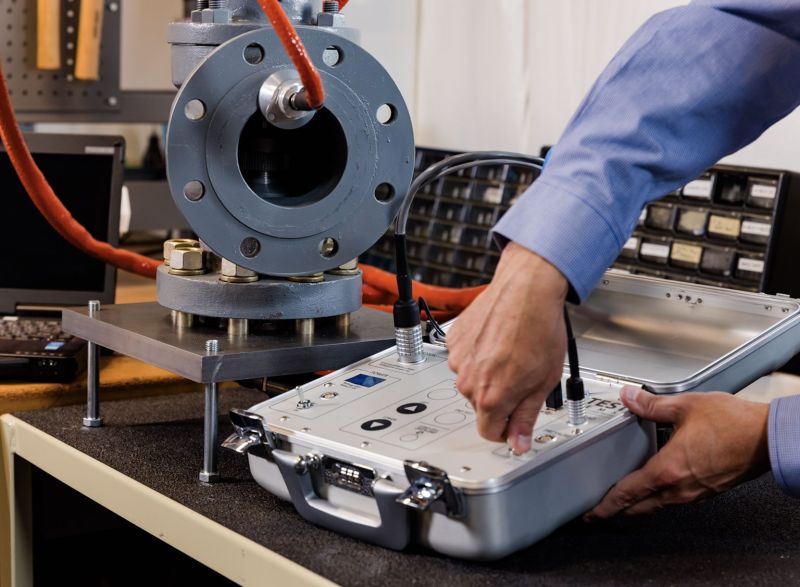
If you already have a pressure relief valve test bench, adding an AccuTEST System doesn’t mean replacing the equipment or processes that already work for you.
The AccuTEST System is an automated lift-assist valve testing system that can be used with a test bench in the shop or taken to the valve for in-line testing.
That flexibility gives valve service companies and maintenance teams another way to use their existing test bench capacity while also expanding where pressure relief valve testing can be performed.
AccuTEST does not manufacture PRV test benches. We manufacture pressure relief valve testing equipment designed to apply and measure controlled lifting force using a computer-controlled electric motor. The system can support testing in the shop or in the plant, depending on your testing requirements.
Key Takeaways:
- AccuTEST does not replace your PRV test bench—it can add automated lift-assist capability to your existing bench testing process.
- The same testing technology can also be used for in-line valve testing while the valve remains installed.
- A computer-controlled electric motor applies smooth, consistent lifting force rather than relying on manual or hydraulic force application.
- Automated test control helps reduce operator variability and improve test repeatability.
- Digital test results and reporting provide documentation of the test rather than simply a PASS/FAIL result.
- In-line testing can help evaluate installed valves before deciding whether additional inspection, repair, or bench testing is required.
How Does AccuTEST Work With a PRV Test Bench?
A pressure relief valve test bench provides the controlled environment and pressure source needed to test a valve after it has been removed from service.
The AccuTEST System can be used as the lift-assist portion of that testing process.
Instead of relying on a manually controlled lifting device, AccuTEST uses a motor-driven, computer-controlled system to apply force to the valve spindle. The load cell measures the applied force, while the software controls the test and calculates the result.
This provides several advantages for bench testing:
- Controlled force application using an electric motor
- Consistent, linear loading as the valve approaches its opening point
- Reduced operator variability compared with manually applied lifting force
- Repeatable testing procedures across technicians
- Automatic test calculations
- Digital test documentation and reporting
For a valve shop with an existing PRV test bench, this means you don’t necessarily need to replace the bench to modernize the testing process. AccuTEST can add automated lift-assist and test-control capability to the equipment you already use.
Can the Same AccuTEST System Be Used for In-Line Testing?
Yes. One of the advantages of the AccuTEST System is that the lift-assist technology isn’t limited to the shop.
For in-line pressure relief valve testing, the AccuTEST load rig is mounted to the valve while the valve remains installed. The system applies a controlled lifting force while accounting for the pressure already acting on the valve.
This allows the technician to determine valve performance without first removing the valve from the process.
That gives organizations two distinct ways to use the system:
With a PRV Test Bench | In-Line Testing | |
Valve location | Removed from service | Remains installed |
Testing environment | Shop/test bench | Plant/process system |
AccuTEST role | Automated lift assist and test control | Automated lift assist and test control |
Force application | Computer-controlled electric motor | Computer-controlled electric motor |
Results | Automatically calculated and documented | Automatically calculated and documented |
Primary benefit | Modernizes and supports bench testing | Allows testing without first removing the valve |
The testing environment changes. The advantages of controlled force application, automated testing, and digital documentation remain.
How Can In-Line Testing Complement Your Bench Testing Program?
A test bench remains necessary whenever a valve needs to be removed for inspection, repair, adjustment, or testing that must be performed in a controlled shop environment.
In-line testing adds another option earlier in the maintenance process.
1. Evaluate Valves Before Removing Them
Without an in-line test, removing a valve may be the first opportunity to determine how it is performing.
In-line testing allows technicians to gather test data while the valve is still installed. Those results can help determine whether further inspection, repair, adjustment, or bench testing is warranted.
The decision to remove a valve still depends on test results, plant procedures, applicable codes, and the facility’s maintenance requirements. But the maintenance team has additional information available before making that decision.
2. Reduce Unnecessary Valve Handling
Removing a pressure relief valve can involve isolating equipment, removing and transporting the valve, moving it to the shop, reinstalling it and returning the equipment to service.
When applicable procedures allow in-line testing, testing the valve in place may eliminate some unnecessary valve removals and associated handling.
For facilities with large valve populations, that can make valve testing programs more efficient and allow maintenance resources to be directed where they are needed most.
3. Make Better Use of Test Bench Capacity
During outages and turnarounds, shop capacity can become a constraint.
In-line testing provides another way to evaluate valve performance and can help maintenance teams identify which valves warrant additional attention.
At the same time, an AccuTEST System used in the shop can provide automated lift-assist capability on the test bench.
Rather than viewing bench testing and in-line testing as competing approaches, the two can become part of the same testing strategy.
4. Create More Consistent Testing
Whether a test is performed in the shop or in the plant, how lifting force is applied matters.
Manual lifting methods can introduce differences in loading rate and operator technique. AccuTEST uses a computer-controlled electric motor to provide smooth, controlled force application.
Automating that portion of the test helps reduce technician-dependent variability and supports more consistent, repeatable testing.
5. Improve Test Documentation
A pressure relief valve test should provide more than a PASS or FAIL result.
AccuTEST automatically captures test information, calculates results and creates a digital test report. This gives technicians and customers a record of the test that can be retained as part of the valve’s maintenance history.
Over time, consistent test records can provide useful information for evaluating valve performance and planning maintenance.
When Should You Use In-Line Testing vs. a Test Bench?
The right approach depends on what needs to be accomplished and on applicable testing requirements.
In-line testing may be appropriate when you want to:
- Verify valve performance while the valve remains installed
- Avoid unnecessary valve removal where permitted
- Evaluate valves before determining the next maintenance step
- Test valves with less disruption to plant operations
- Gather documented test results in the field
Test bench testing may be appropriate when:
- The valve has already been removed
- Inspection, repair or adjustment is required
- A controlled shop environment is required
- Applicable procedures or regulations require bench testing
- Additional off-line testing needs to be performed
AccuTEST can support both environments: as an automated lift-assist testing system used with your existing test bench and as portable equipment for testing installed valves.
What Should You Look for in Pressure Relief Valve Testing Equipment?
Whether you’re upgrading your test bench process or expanding into in-line testing, look beyond the maximum force rating of the equipment.
Consider how the system controls the test and how easy it is for technicians to produce consistent results.
Important capabilities include:
- Motor-driven, computer-controlled force application
- Smooth and consistent loading
- Load cell options appropriate for the valves being tested
- Proper alignment to minimize side-loading
- Automated test control and calculations
- Manual operating capability when needed
- Digital test records and professional reports
- Portability for in-line applications
- Technical support and equipment calibration
These capabilities affect not only how quickly a test can be completed, but also how consistently the process can be repeated from one technician or valve to the next.
One System for the Shop and the Plant
A PRV test bench and in-line testing equipment don’t have to represent two separate testing strategies.
The AccuTEST System can bring automated lift-assist technology to an existing test bench and allow that same testing approach to be taken into the plant for in-line testing.
For valve service companies, that can mean getting more capability from an existing bench while expanding the services that can be performed in the field.
For plant maintenance teams, it provides another way to evaluate installed valves, document results and make better-informed maintenance decisions.
The goal isn’t to replace your test bench. It’s to give your valve testing program more options for where and how valves can be tested.
Already have a PRV test bench? See how the AccuTEST System can add automated lift-assist and in-line testing capability to your existing program.
Frequently Asked Questions
Does AccuTEST sell pressure relief valve test benches?
No. AccuTEST manufactures automated lift-assist pressure relief valve testing equipment. The AccuTEST System can be used with an existing PRV test bench in the shop or used for in-line testing while a valve remains installed.
Can the AccuTEST System be used with a PRV test bench?
Yes. The AccuTEST System can be used as an automated lift-assist system with an existing pressure relief valve test bench. Its computer-controlled electric motor applies lifting force while the load cell and software measure, control and document the test.
Can the same AccuTEST System be used for in-line testing?
Yes. AccuTEST Systems can also be used to test pressure relief valves while they remain installed. This gives valve service companies and maintenance teams the ability to use the equipment in both shop and in-plant testing applications.
Does in-line testing replace bench testing?
No. In-line and bench testing serve different purposes. In-line testing allows a valve to be evaluated while installed, while bench testing provides a controlled environment for valves that have been removed for testing, inspection, repair or adjustment. Applicable codes, procedures and maintenance requirements determine which testing method is appropriate.
What are the benefits of using automated lift-assist equipment for pressure relief valve testing?
Automated lift-assist equipment controls how lifting force is applied during the test. AccuTEST uses a computer-controlled electric motor to provide smooth, consistent force application while measuring the force with a load cell. Automated control helps reduce operator variability, improve repeatability and create consistent digital test documentation.
What pressure relief valve testing equipment does AccuTEST offer?
AccuTEST offers two system models: the AccuTEST-SL Performance Model and the AccuTEST-TT Premium Model. Both use automated motor-driven lift technology and modern testing software. The SL is well suited for shop applications while also serving as a general-purpose in-line system. The TT adds sensor capabilities, detection methods, advanced software features and additional portability features for shop and in-plant testing.


