
PSV Calibration: How Precise Control Drives Repeatable Results

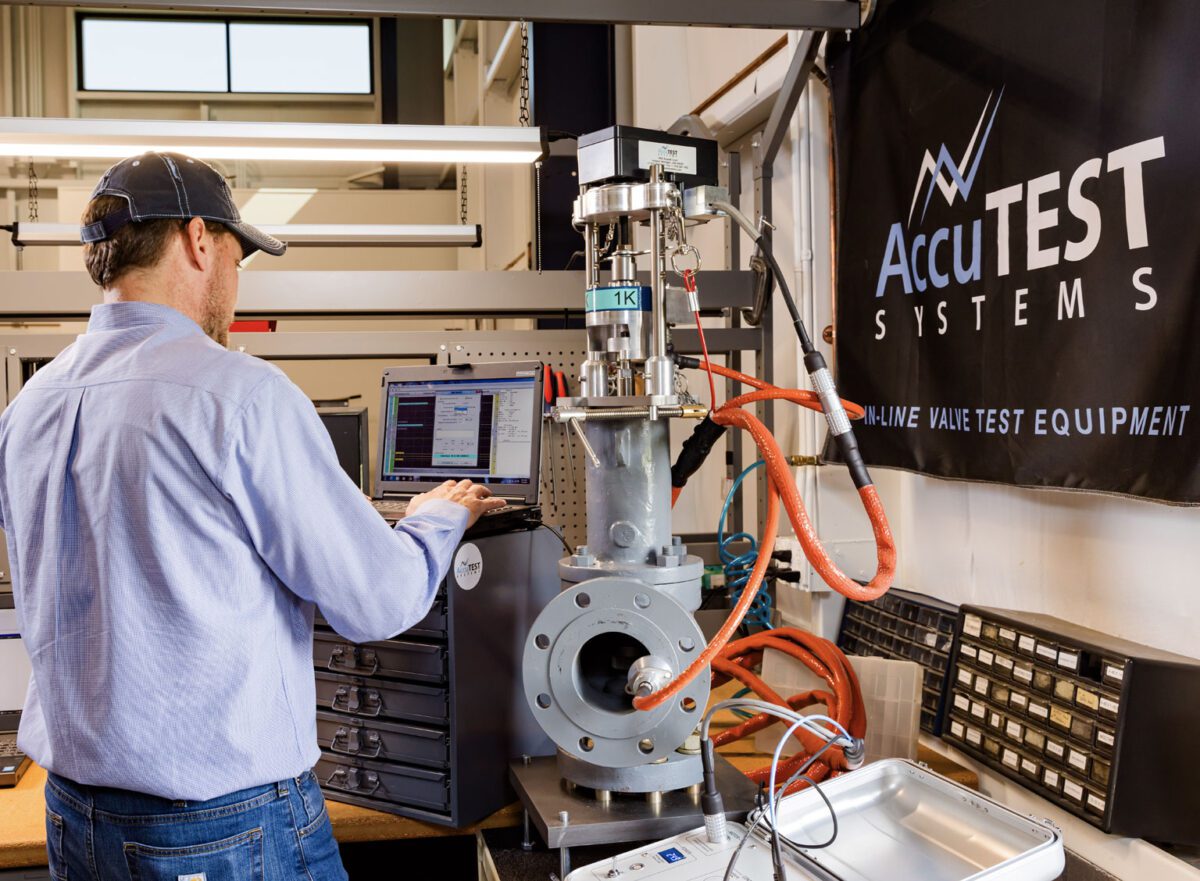
When performing PSV calibration, achieving initial accuracy is only half of the challenge.
For valve repair shops and maintenance operations, the true measure of a successful test is repeatability—the ability to produce consistent, verifiable results when the same valve is tested under equivalent conditions, regardless of who performs the test.
As compliance requirements increase and digital documentation becomes the norm, accurate testing alone is no longer enough. Today’s facilities need testing methods that improve consistency, reduce variability, and produce objective data that supports every calibration.
One of the biggest factors influencing repeatability is how force is applied as the valve approaches its set pressure.
PSV Calibration: Key Takeaways
- Support Technician Expertise: Smooth, computer-controlled force application helps technicians evaluate valve behavior more consistently while keeping them in control of the testing process.
- Improve Repeatability: Consistent force application reduces operator-to-operator variability and produces more repeatable PSV calibration results.
- Strengthen Documentation: Digital data collection improves traceability and provides objective records to support compliance requirements.
- Enhance Shop Safety: Modern testing systems reduce technician exposure to manual high-pressure operations while incorporating built-in safety protections.
- Modernize Without Starting Over: The AccuTEST Trade-In Program helps facilities transition from legacy hand-jack systems while protecting their existing investment.
Modern Standards and the Need for Repeatability
Pressure safety valves (PSVs) are precision-engineered devices designed to protect personnel, equipment, and processes by opening at a specified set pressure. Proper PSV calibration verifies that each valve performs as intended and continues to meet the requirements of ASME Section VIII and other applicable industry standards.
For decades, successful PSV calibration has depended on the knowledge and experience of skilled valve technicians. Their expertise remains essential to identifying valve behavior as it approaches simmer and lift.
Today, customers expect more than accurate test results. They also expect consistent testing methods, objective documentation, and repeatable results across technicians, locations, and test dates. One of the biggest factors influencing repeatability is how force is applied as the valve approaches its set pressure. Modern PSV calibration systems provide smooth, controlled force application while allowing the technician to remain fully in control of the testing process.
Why Repeatability Can Be Challenging
Pressure Application Consistency
Manual pressure application naturally occurs in small increments that vary with the operator. Reproducing the same pressure profile from one test to the next can be difficult.
Operator-to-Operator Variation
Differences in pumping speed, force application, and timing are normal, but they can contribute to variability when multiple technicians test the same valve.
Increasing Documentation Requirements
Digital records and graphical test data provide objective evidence that supports technician observations, simplifies audits, and improves confidence in PSV calibration results.
Linear Force Curves: Smooth Force Application Matters
The way force is applied as a valve approaches its set pressure has a direct impact on repeatability.
A smooth, controlled increase in pressure allows technicians to observe valve behavior more clearly as it approaches simmer and reaches lift. Stable force application makes subtle valve movement easier to recognize while reducing the effects of abrupt pressure changes that can influence the interpretation of test results.
Manual Pumping Profile: |__–|__–|__–| Incremental manual pressure increases | Motorized Force Application: /__________________ Smooth, continuous force application |
The AccuTEST System uses a computer-controlled electric actuator to apply force in a smooth, continuous manner throughout the test. Rather than relying on manual pumping to create the pressure profile, the system provides controlled force application while the technician remains fully in control of the testing process.
Operators may also choose to run the system in manual mode, providing the same level of control they would expect from traditional equipment while benefiting from the smoother, motor-driven application of force.
The result is a more repeatable testing process that supports technician expertise rather than replacing it. By reducing variability in how force is applied, technicians can focus on evaluating valve behavior and making confident decisions based on stable, objective test data.
Improving Repeatability Through Controlled Force Application
Repeatability isn’t achieved by removing the technician from the process. It’s achieved by reducing the variables that can influence the test.
The AccuTEST System builds consistency into force application so technicians can perform each test under comparable conditions. The technician still determines how the valve behaves, evaluates simmer and lift characteristics, and decides whether the valve meets specification. The system simply delivers a more consistent testing environment from one test to the next.
Advantages of Controlled Force Application:
Smooth Motorized Force Application
Applies force at a controlled rate, making valve behavior easier to observe as the set pressure is approached.
Real-Time Graphical Data
Displays valve response throughout the test, providing objective information that complements the technician’s evaluation.
Digital Test Records
Automatically captures test data and generates consistent reports that improve traceability and simplify customer documentation.
Improving Safety Without Sacrificing Control
PSV calibration requires technicians to work around high-pressure systems where consistent procedures and reliable equipment are essential. Modern testing systems help improve both by automating force application while keeping the technician fully in control of the testing process.
Safety Advantages:
Reduced Physical Effort
Eliminates repetitive manual pumping, reducing operator fatigue during extended testing.
Built-In Pressure Protection
Software-controlled operating limits help prevent unintended over-pressurization during testing.
Consistent Testing Procedures
Computer-controlled force application helps create a more repeatable testing process from one technician to the next.
Digital Test Documentation
Automatically recorded test data improves traceability and supports customer documentation requirements.
Engineered for Safe Operation
The AccuTEST System incorporates both electronic and mechanical safeguards designed to place the system in a safe condition if normal operation is interrupted.
If power is lost or communication with the controller is interrupted during a test, the system immediately stops motor-driven force application and transitions to a safe operating state. This design helps protect both the technician and the equipment while preventing unintended loading of the valve.
Manual vs. Computer-Controlled PSV Calibration
For a quick technical reference, the operational differences are summarized below:
| Feature: | Manual Pressure Application: | The AccuTEST System: |
| Force Application | Operator-controlled manual pumping | Smooth, computer-controlled actuator |
| Pressure Profile | Incremental pressure increases | Smooth, continuous force application |
| Testing Consistency | Dependent on operator technique | Highly repeatable force application |
| Documentation | Manual Recording | Automatic digital test records |
| Operator Control | Manual Control | Full operator control with automated or manual operation |
| Physical Effort | Continuous manual pumping | Motor-driven force application |
The AccuTEST System: A Practical Path Forward
Many valve repair shops have built their reputation using manual test equipment and the expertise of skilled technicians. The AccuTEST System isn’t designed to replace that expertise—it’s designed to support it.
By providing smooth, computer-controlled force application, the AccuTEST System helps reduce variability in the testing process while improving repeatability, documentation, and operator efficiency. Technicians remain in control of every test while benefiting from a more consistent testing environment.
For facilities looking to modernize without replacing their entire investment, the AccuTEST Trade-In Program provides credit for qualifying legacy hand-jack systems, making the transition to computer-controlled testing straightforward and cost-effective.
Frequently Asked Questions About PSV Calibration
What is PSV calibration?
PSV calibration is the process of verifying and, when necessary, adjusting a pressure safety valve to ensure it opens at its specified set pressure. Accurate PSV calibration helps protect personnel, equipment, and processes while supporting compliance with applicable industry standards
Why is repeatability important in PSV calibration?
Repeatability ensures that the same valve produces consistent results when tested under equivalent conditions. Consistent testing improves quality control, increases confidence in valve performance, and provides greater assurance that documented results accurately represent valve behavior.
How does manual pressure application affect repeatability?
Manual pressure application naturally occurs in small increments that vary with the operator. Differences in pumping speed, timing, and force application can influence how consistently the valve approaches its set pressure and how repeatable test results are from one technician to another.
How does the AccuTEST System improve repeatability?
The AccuTEST System uses a computer-controlled electric actuator to apply force smoothly and consistently throughout the test. The technician remains fully in control of the testing process—including operation in manual mode when desired—while benefiting from a more repeatable testing environment.
What happens if the system loses power during operation?
The AccuTEST System incorporates electronic and mechanical safeguards that immediately stop motor-driven force application if power or controller communication is interrupted. The system transitions to a safe operating state to help protect both the technician and the equipment.
The Future of PSV Calibration
As skilled labor becomes harder to find and compliance requirements continue to increase, relying on operator feel to calibrate critical safety valves introduces unnecessary variability into the testing process.
Modern pressure relief valve testing equipment standardizes the testing environment by building consistency directly into the equipment rather than depending on individual technician technique. When force is applied smoothly and continuously, repeatable PSV calibration becomes easier to achieve. The result is greater confidence in test data, improved safety performance, and more reliable compliance documentation.
Improve PSV Calibration Repeatability with the AccuTEST System
As compliance requirements continue to evolve and experienced technicians become increasingly difficult to replace, improving the repeatability of PSV calibration has never been more important.
The AccuTEST System combines smooth, computer-controlled force application with digital documentation and built-in safety features to help technicians produce more consistent, repeatable test results—without sacrificing operator control.
Whether you’re upgrading an existing valve shop or expanding field testing capabilities, the AccuTEST System provides a practical solution for improving repeatability, efficiency, and confidence in every PSV calibration.
Schedule a demo to see how the AccuTEST System can help improve the consistency and repeatability of your PSV calibration process.