
What Has Changed in In-Line PSV Testing? Why More Valve Service Companies Are Reconsidering Their Equipment

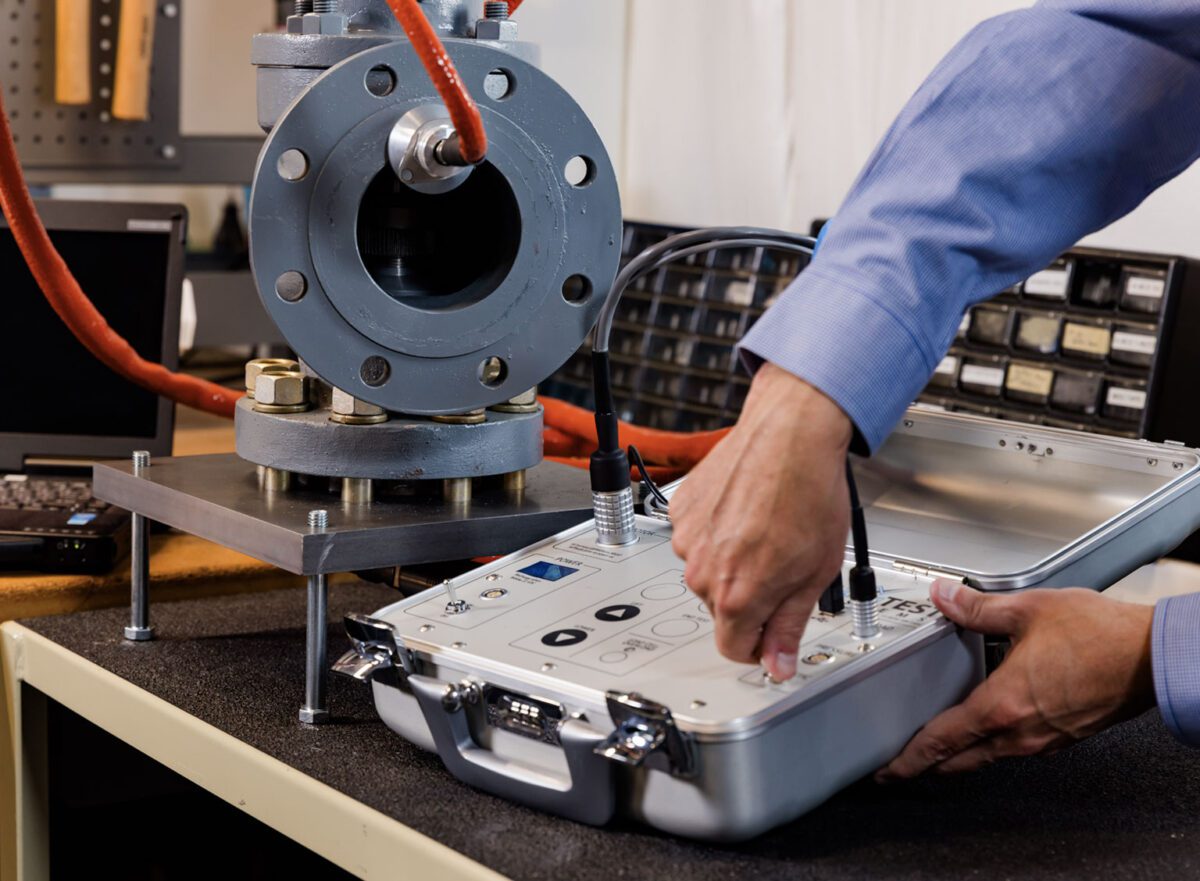
For decades, manual hand jacks have been the standard for in-line pressure safety valve (PSV) testing. They remain a proven tool in the hands of experienced technicians who understand valve behavior and know how to perform reliable field testing.
So why are more valve service companies evaluating automated in-line testing systems today?
The answer isn’t that manual testing no longer works. It’s that modern in-line testing equipment has evolved significantly. Today’s systems are lighter, easier to transport, more intuitive to operate, and capable of producing consistent, digitally documented results while keeping the technician in control of the testing process.
As maintenance organizations place greater emphasis on repeatability, documentation, and outage efficiency, many service companies are taking a fresh look at what modern in-line testing equipment can offer.
Several developments have changed the way valve service companies evaluate in-line testing equipment today.
How Modern In-Line Testing Equipment Has Evolved
Modern in-line PSV testing equipment has become more practical, portable, and technician-focused than earlier generations of automated systems.
Early automated test equipment often prioritized automation over usability. Many systems were large, difficult to transport, or complicated to set up in the field. For technicians accustomed to manual testing, the added complexity often outweighed the benefits.
Today’s systems are different. Manufacturers have focused on designing equipment specifically for field service, where portability, durability, and fast setup are just as important as measurement accuracy. Lightweight components, improved clamping systems, and simplified operation allow technicians to move efficiently between valves while working within the time constraints of planned outages.
Perhaps the biggest change is the role of the technician.
Modern systems are designed to automate the physical task of applying lift force—not the technician’s judgment. Experienced operators still set up the test, monitor valve behavior, interpret the results, and determine whether the valve meets acceptance criteria. The equipment simply applies force with greater consistency than can be achieved manually.
This shift from replacing operator involvement to supporting operator expertise is one of the primary reasons many valve service companies are reconsidering automated testing equipment today.
Why Repeatability Has Become More Important
Modern in-line PSV testing equipment improves repeatability by applying smooth, controlled lift force while allowing technicians to evaluate valves under consistent testing conditions.
Plant owners increasingly expect more than an accurate set pressure. They also expect testing methods that are consistent, well-documented, and repeatable from one technician, outage, or turnaround to the next.
One of the greatest sources of variation in manual testing has always been force application. No technician, regardless of experience, can apply perfectly smooth, linear force with a manual hand jack every time. Small differences in pumping speed and pressure application naturally occur and can make it more difficult to consistently identify the exact point where a valve begins to lift.
Modern in-line testing systems reduce that variability by using a computer-controlled actuator to apply smooth, continuous lift force throughout the test. The technician’s responsibility doesn’t change—the equipment simply provides more consistent test conditions.
The result is improved repeatability, greater confidence in the data, and digital documentation that many facilities increasingly expect as part of their maintenance programs.
Modern Automation Doesn’t Mean Giving Up Control
Modern automated PSV testing systems do not replace the technician—they improve how lift force is applied while keeping the technician in control of the testing process.
One of the most common misconceptions about automated testing equipment is that automation removes the technician from the process. In reality, today’s systems are designed to support the technician’s expertise, not replace it.
Experienced technicians still determine the testing procedure, position the equipment, observe valve behavior, interpret the results, and decide whether the valve meets the required acceptance criteria. Those responsibilities remain exactly where they belong—with the technician.
What the equipment automates is the physical task of applying lift force. Rather than relying on manual pumping, modern systems use a computer-controlled actuator to produce a smooth, consistent force ramp throughout the test.
Some systems, including the AccuTEST platform, also recognize that technicians sometimes prefer direct control over force application. In Manual Mode, the operator controls the rate of force application while the motor-driven system provides smooth, precise movement. The technician retains complete control of the test while eliminating the physical effort and variability associated with manually pumping a hydraulic hand jack.
The result is a testing process that combines technician judgment with more consistent force application—delivering repeatable results without changing the technician’s role.
Why One Technician Can Accomplish More Today
Modern in-line PSV testing equipment allows one technician to complete more work by reducing setup time, simplifying equipment handling, and improving testing efficiency.
Increasing productivity isn’t simply about reducing labor. It’s about making the most of experienced technicians during planned outages and turnarounds, where every hour counts.
Older testing equipment often required heavy components, multiple hydraulic hoses, and additional personnel to transport, assemble, and operate safely in the field. While effective, these systems could slow movement between valves and increase setup time throughout the day.
Modern systems have been designed with field mobility in mind. Lightweight structural components, integrated clamping systems, and simplified setup allow technicians to move efficiently from one valve to the next with less physical effort.
The productivity gains extend beyond the mechanical aspects of the test. Automated data collection and digital reporting reduce administrative work after each valve is completed, allowing technicians to spend more time testing and less time documenting results.
For many valve service companies, these improvements translate into greater testing capacity during an outage without sacrificing testing quality or technician safety.
What Should Companies Consider When Upgrading PSV Testing Equipment?
The best in-line PSV testing equipment improves repeatability, supports the technician, and fits the realities of field service—not just laboratory performance.
Every valve service company has different customers, procedures, and outage schedules. That makes equipment selection about more than comparing specifications.
When evaluating modern in-line testing systems, companies should consider several practical questions:
- Does the system apply smooth, controlled lift force that improves test repeatability?
- Is the equipment lightweight and portable enough for efficient field use?
- Does it allow technicians to remain in control of the testing process?
- Can one technician transport, set up, and operate the equipment safely?
- Does it generate digital documentation that customers increasingly expect?
- Is the system built to withstand the demanding conditions of plant environments?
Perhaps the most important consideration is whether the equipment complements the experience of the technician using it.
The best systems don’t ask experienced technicians to change how they evaluate valves. They simply provide better tools for performing the physical aspects of the test with greater consistency, less effort, and improved documentation.
That philosophy reflects one of the biggest changes in in-line PSV testing over the past decade. The industry hasn’t moved away from technician expertise—it has developed equipment that allows experienced technicians to perform at an even higher level.
As more valve service companies evaluate how they will meet future customer expectations for repeatability, documentation, and outage efficiency, modern in-line testing equipment has become a practical upgrade rather than simply an alternative to traditional methods.
See How Modern In-Line PSV Testing Has Evolved
If you haven’t evaluated automated testing equipment in several years, today’s systems may be very different from what you remember. Learn how the AccuTEST System combines smooth, computer-controlled force application with full technician control to improve repeatability, portability, and field productivity.


